

List Entry Information
Status
Listed
List Entry Status
Historic Place Category 1
Access
Private/No Public Access
List Number
4370
Date Entered
26th November 1987
Date of Effect
26th November 1987
City/District Council
Queenstown-Lakes District
Region
Otago Region
Legal description
Secs 17-18 Blk VI Arrowtown
Status
Listed
List Entry Status
Historic Place Category 1
Access
Private/No Public Access
List Number
4370
Date Entered
26th November 1987
Date of Effect
26th November 1987
City/District Council
Queenstown-Lakes District
Region
Otago Region
Legal description
Secs 17-18 Blk VI Arrowtown
Why is this place significant?
Historic Significance
Historical Significance or Value Arrowtown had a commercial centre on Buckingham Street by 1863 with false fronted shops in temporary materials. Pritchard's store, established in 1862, would have been one of these. Over the next few decades the wooden shops were replaced with more substantial stone buildings. When surveyed sections became available in Arrowtown in 1870, Robert Pritchard took up the crown grants on a section on Buckingham St and on three across Arrow Lane and up Berkshire St. In 1875 he bought two more sections from a Mr Goldston to give him a solid block of land - sections 17 and 18 on Buckingham Street and sections 28-31 on Berkshire Street. The store is built on section 18 and so was probably built soon after Pritchard bought the section. Pritchard raised 1000 pounds on mortgage in 1875 which would have helped him to buy the extra two sections, and was probably sufficient to build the store and its attached house. He refinanced 750 pounds of the mortgage in 1880 and paid it off in 1884. Pritchard died a storekeeper in 1907 and left all his land and building to his daughter, Grace Allen. She leased at first to Goodleys and then to W Reid and Sons in 1921. The Reids bought the store in 1926 and held it until 1942. It was bought by W B Gibb and Sons who became J Rattray and Son, the large wholesale grocery business. Mr A R Hamilton at first leased from Rattrays and then bought the store in 1981.
Physical Significance
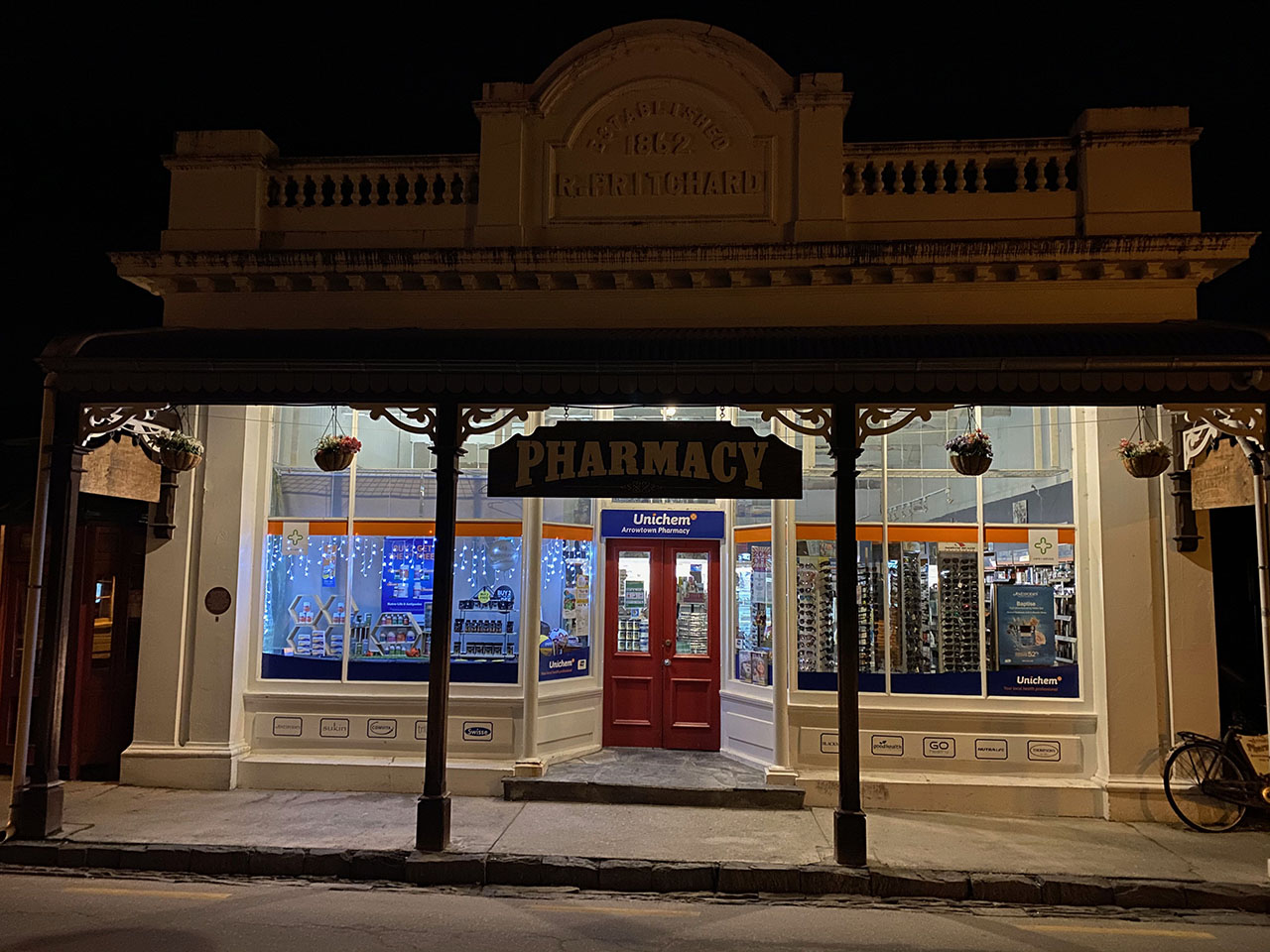
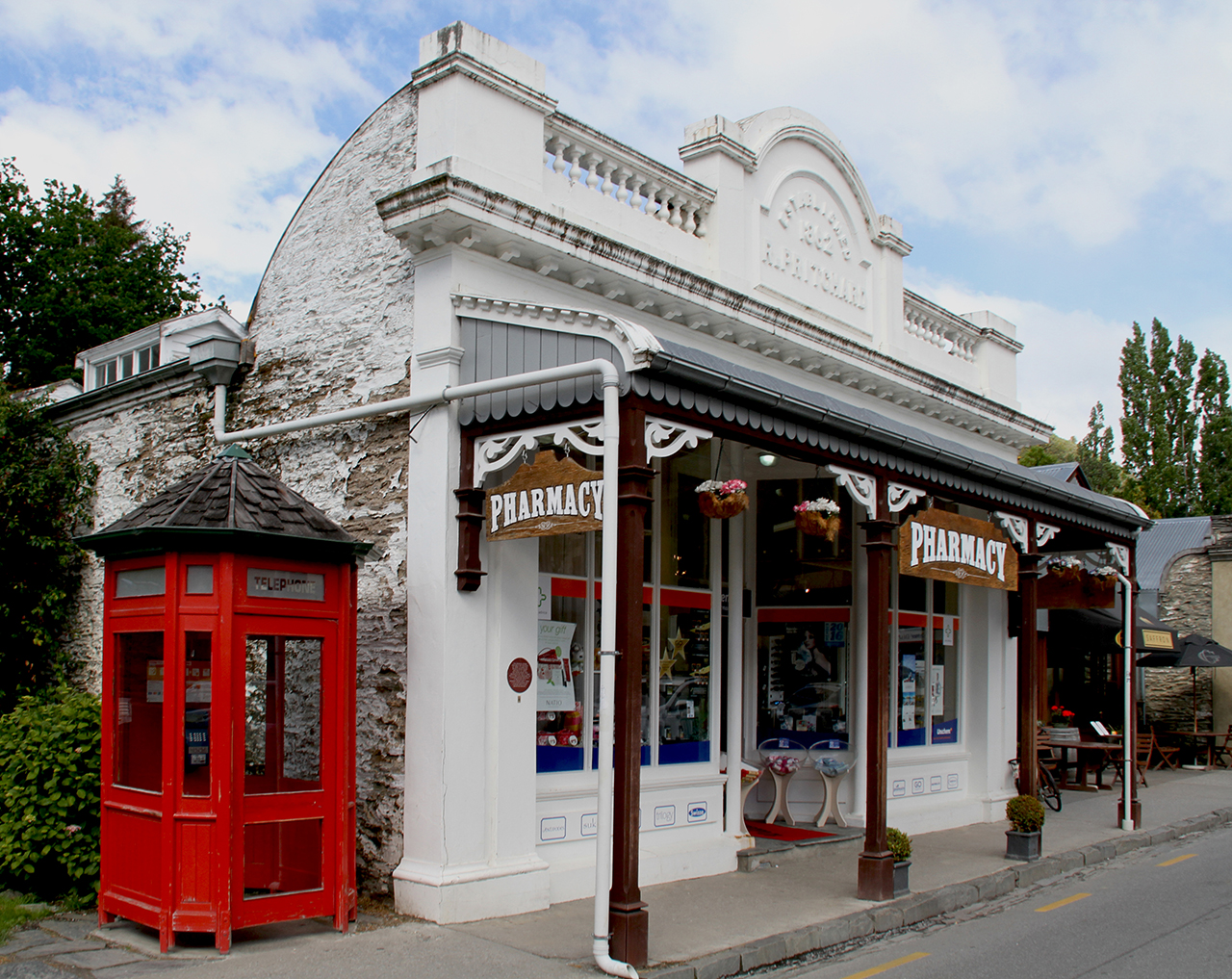
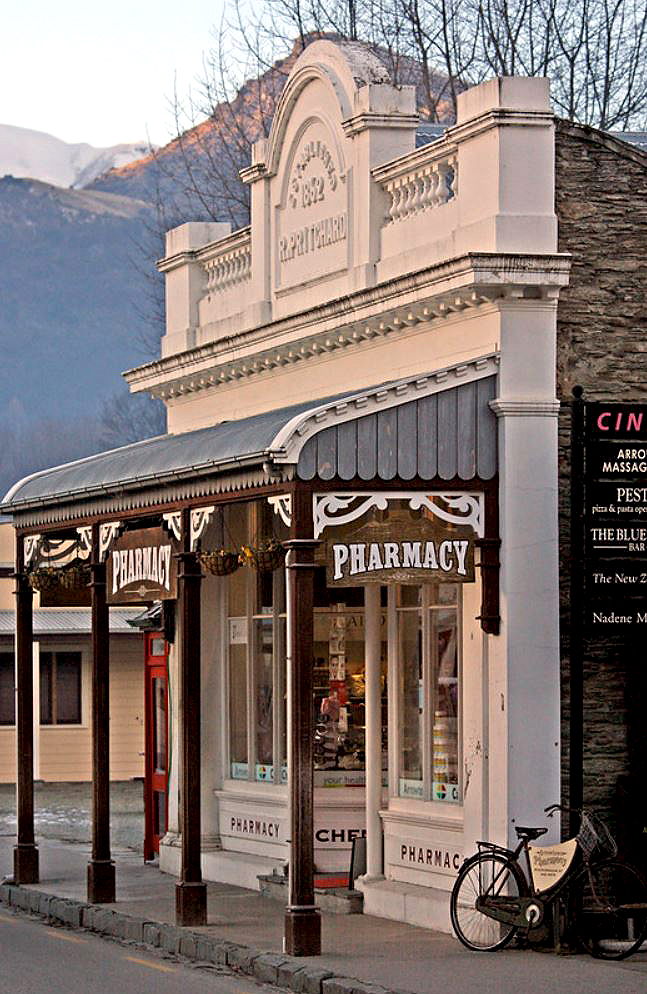
ARCHITECTURAL SIGNIFICANCE: An interesting vernacular building. TOWNSCAPE/LANDMARK SIGNIFICANCE: A major nineteenth century building on the main street of Arrowtown. The long stone side wall dominates the only open green space on this street.
Why is this place significant?
Historic Significance
Historical Significance or Value Arrowtown had a commercial centre on Buckingham Street by 1863 with false fronted shops in temporary materials. Pritchard's store, established in 1862, would have been one of these. Over the next few decades the wooden shops were replaced with more substantial stone buildings. When surveyed sections became available in Arrowtown in 1870, Robert Pritchard took up the crown grants on a section on Buckingham St and on three across Arrow Lane and up Berkshire St. In 1875 he bought two more sections from a Mr Goldston to give him a solid block of land - sections 17 and 18 on Buckingham Street and sections 28-31 on Berkshire Street. The store is built on section 18 and so was probably built soon after Pritchard bought the section. Pritchard raised 1000 pounds on mortgage in 1875 which would have helped him to buy the extra two sections, and was probably sufficient to build the store and its attached house. He refinanced 750 pounds of the mortgage in 1880 and paid it off in 1884. Pritchard died a storekeeper in 1907 and left all his land and building to his daughter, Grace Allen. She leased at first to Goodleys and then to W Reid and Sons in 1921. The Reids bought the store in 1926 and held it until 1942. It was bought by W B Gibb and Sons who became J Rattray and Son, the large wholesale grocery business. Mr A R Hamilton at first leased from Rattrays and then bought the store in 1981.
Physical Significance
ARCHITECTURAL SIGNIFICANCE: An interesting vernacular building. TOWNSCAPE/LANDMARK SIGNIFICANCE: A major nineteenth century building on the main street of Arrowtown. The long stone side wall dominates the only open green space on this street.
Construction Details
Start Year
1875
Type
Original Construction
Construction Materials
Mortared and plastered schist with arched concrete parapet. Its long side wall beside the only space in the main street reveals the way in which schist was used to build thick walls. The thickness of the wall is shown by the deep window sills of the living quarters.
Notable Features
The age and size of the building within a streetscape of early goldfields buildings.
Construction Details
Start Year
1875
Type
Original Construction
Construction Materials
Mortared and plastered schist with arched concrete parapet. Its long side wall beside the only space in the main street reveals the way in which schist was used to build thick walls. The thickness of the wall is shown by the deep window sills of the living quarters.
Notable Features
The age and size of the building within a streetscape of early goldfields buildings.
ARCHITECTURAL DESCRIPTION (Style): A colonial store with classically styled false front. MODIFICATIONS: The building was originally two storied but after a fire in the 1880s it was reduced to one storey with a large parapet. The elaborate parapet has been simplified by removal of four finials, and the ornamental verandah has been removed.
ARCHITECTURAL DESCRIPTION (Style): A colonial store with classically styled false front. MODIFICATIONS: The building was originally two storied but after a fire in the 1880s it was reduced to one storey with a large parapet. The elaborate parapet has been simplified by removal of four finials, and the ornamental verandah has been removed.
Historical and Associated Iwi / Hapū / Whānau
Information Sources
Arrowtown Borough Council
Arrowtown Borough Council
Other Information
This historic place was registered under the Historic Places Act 1980. This report includes the text from the original Building Classification Committee report considered by the NZHPT Board at the time of registration. Please note that entry on the New Zealand Heritage List/Rarangi Korero identifies only the heritage values of the property concerned, and should not be construed as advice on the state of the property, or as a comment of its soundness or safety, including in regard to earthquake risk, safety in the event of fire, or insanitary conditions.
Historical and Associated Iwi / Hapū / Whānau
Information Sources
Arrowtown Borough Council
Arrowtown Borough Council
Other Information
This historic place was registered under the Historic Places Act 1980. This report includes the text from the original Building Classification Committee report considered by the NZHPT Board at the time of registration. Please note that entry on the New Zealand Heritage List/Rarangi Korero identifies only the heritage values of the property concerned, and should not be construed as advice on the state of the property, or as a comment of its soundness or safety, including in regard to earthquake risk, safety in the event of fire, or insanitary conditions.
Former Usages
General Usage: Trade
Specific Usage: Shop
Former Usages
General Usage: Trade
Specific Usage: Shop
Sign up to hear more
Get the latest heritage news, features and events delivered
straight to your inbox.
